Is a 100% cotton comforter cotton inside, too?
Updated .
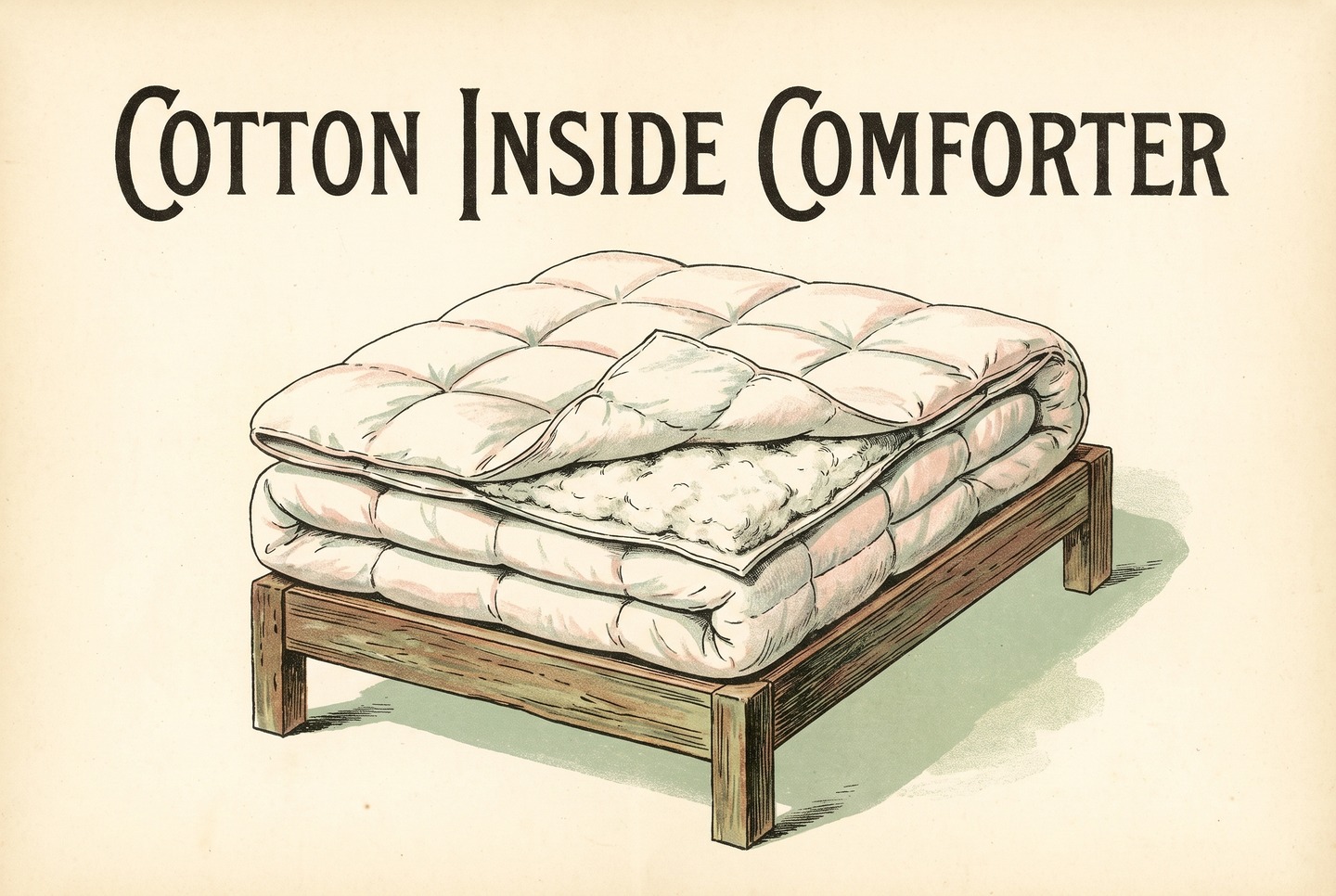
Most comforters sold as cotton in the United States have a cotton shell. What sits inside varies more than the product titles suggest. The sewn-in label is the one place the law makes a seller tell you.
Short answer: Sometimes, but not by default. A product labeled 100% cotton should contain only cotton, and fill added for warmth must be listed as its own section (FTC, 2026). Of 8 seller pages we read on September 23, 2026, 4 described cotton fill and 4 put down, wool or synthetic fiber inside a cotton shell. Read the fill line, not the headline. Then ask for the fill weight in ounces, which none of the all-cotton pages gave.
This guide is for: people in the United States choosing a cotton comforter, a cotton duvet insert or a cotton twin comforter who want to know what the label covers.
Key Takeaways
Three points carry most of this guide: what the label covers, what our page count found, and what fill weight can tell you.
- A 100% cotton label should mean only cotton, and FTC rules require fill used for warmth to be disclosed as a separate section.
- Of 8 seller pages we read, 4 described cotton fill; the other 4 put down, wool or synthetic fill inside a cotton shell.
- None of the 4 all-cotton pages stated a total fill weight in ounces; 2 gave 240 GSM, which is about 33 oz (950 g) on a 68 by 90 inch twin by our arithmetic.
On This Page
Each line below names one question, in the order most shoppers tend to ask it, from the label to washing and sleeping hot.
What does 100% cotton on a comforter label cover?
Under FTC rules, 100% cotton means only cotton, and fill used for warmth must be listed on its own, so read both lines of the label.
The Federal Trade Commission enforces the textile labeling law, which makes it unlawful to misbrand fiber content or advertise it deceptively (FTC). Its guidance says a product should not be labeled 100% cotton unless it contains only cotton. Minor non-cotton trim is the exception. Any fiber at 5% or more of the product's weight must be named with its percentage (FTC, Calling It Cotton).
For a comforter, the rule about the inside matters most. When filling is added for warmth, its fiber must be disclosed as a separate section of the label, even if it matches the outer fabric (FTC, Threading Your Way). The regulation sets the same requirement in 16 CFR Part 303.
So your label comes in two parts. Product titles are looser. One twin insert sold on Walmart leads with a pure cotton shell and 55 ounces of fill, yet the fill is a down alternative (Walmart). The title is accurate as far as it goes. It answers a different question from yours, and you only find the fill fiber further down.
| Wording you see | What it tells you | What to check next |
|---|---|---|
| 100% cotton, one line, no sections | Cotton throughout, apart from trim | Total fill weight in ounces |
| Shell: cotton, Fill: polyester | Cotton cover over synthetic fill | Whether you want synthetic fill |
| Cotton shell, in a product title | The cover fiber only | The fill line on the label |
| Down alternative | Not down; the phrase names no fiber | The fill line on the label |
Is the fill inside a cotton comforter usually cotton?
Of 8 seller pages we read, 4 described cotton fill, 2 put down or wool inside a cotton shell, and the other 2 used synthetic fill.
We read 8 seller product pages on September 23, 2026, each selling a comforter or insert described as cotton in its title or opening lines. We counted only what each page states about the fill. We did not handle, weigh or test any comforter, and our method page explains how pages are chosen.
The count split three ways. Four pages described cotton fill throughout, two put down or wool inside a cotton shell, and two used synthetic fill. One page titled as an organic cotton comforter says it uses synthetic down fill instead of cotton fill (Organic Favorite).
| What the page says is inside | Pages | Count |
|---|---|---|
| Cotton shell, cotton fill | Coyuchi, Crane & Canopy, Quahog Bay, Whisper Organics | 4 |
| Cotton shell, down or wool fill | The Company Store (down), Earthsake (wool) | 2 |
| Cotton shell, synthetic fill | Sheetsnthings on Walmart, Organic Favorite | 2 |
Eight pages is a small set. Treat the split as a picture of one shelf, not a market share. Even so, 4 of the 8 comforters that lead with cotton are not cotton inside. Only the fill line tells you which.
Down or wool can suit you well. Each makes a different product, with different warmth, weight and care. Our page on what a cotton duvet is sets out the terms if you want them side by side.
How warm is a cotton comforter compared with down or wool?
Cotton fill insulates well while dry but holds moisture, and a 2024 review found goose down duvets deepened sleep in cool rooms.
The clearest summary of the evidence is a systematic review that found only nine eligible studies comparing sleep across fiber types. Its duvet comparisons covered cotton, duck down, goose down, polyester and wool (Journal of Sleep Research, 2024). Its duvet finding favors goose down. Those duvets increased slow-wave sleep, the deep stage, in young adults under cool conditions.
The same review explains the physics. Natural fibers such as cotton and wool conduct heat poorly when dry, but conduct it much better after absorbing moisture. For warm rooms, it adds, wool lets water vapor through more readily than cotton or polyester, so sweat evaporates from your skin and your heat leaves with it.
Most direct comparisons test sleepwear, not comforters. Thirty-six adults aged 50 to 70 slept in a warm room in cotton, polyester and wool sleepwear in one randomized trial (Nature and Science of Sleep, 2019). Wool came out ahead. Sleep fragmentation was 12.1 per hour in wool, against 13.3 in cotton and 13.7 in polyester.
That room was held at 86°F (30°C), warmer than most bedrooms. What does that mean for you? We found no study testing a cotton-filled comforter against a down one at the same weight. Cotton fill is a reasonable choice in a dry, moderate room. If your bedroom runs cold, the only duvet evidence we found points toward down. Our Compared page puts the fill types side by side.
How much should a cotton comforter weigh?
No all-cotton page we read gave a total fill weight in ounces; two gave 240 GSM, which works out to about 33 oz across a twin.
Fill weight is the total weight of material inside. US sellers usually give it in ounces. The down, wool and synthetic sellers in our set gave it. None of the all-cotton pages in our count stated a total fill weight in ounces.
Two gave a density instead: 240 GSM, meaning grams per square meter (Whisper Organics).
You can turn that density into ounces yourself. 240 g per square meter is about 7.1 oz per square yard. A 68 by 90 inch twin covers about 3.9 square meters, so 240 GSM works out to roughly 33 oz (950 g) of fill, if the figure describes the batting across the whole surface. That is our arithmetic, not a number the seller publishes. It still gives you a benchmark.
| Page | Fill | Twin size (inches) | Stated fill for a twin |
|---|---|---|---|
| The Company Store | Down | 70 x 90 | 20 oz light, 25 oz medium, 30 oz extra warmth |
| Earthsake | Wool | 68 x 86 | 36 oz tropical, 49 oz regular |
| Sheetsnthings on Walmart | Down alternative | 68 x 90 | 55 oz, extra warm |
| Whisper Organics | Cotton | Not given | 240 GSM; no ounce total given |
Ounces only compare like with like. A wool figure and a down figure describe different fibers, so use weight to compare two comforters with the same fill. Ask a cotton seller for the total, then set it against the 33 oz estimate above.
What size cotton comforter fits a twin bed?
Twin comforters on the pages we read ran from 68 by 86 inches to 70 by 90, so check how far each will hang past your mattress.
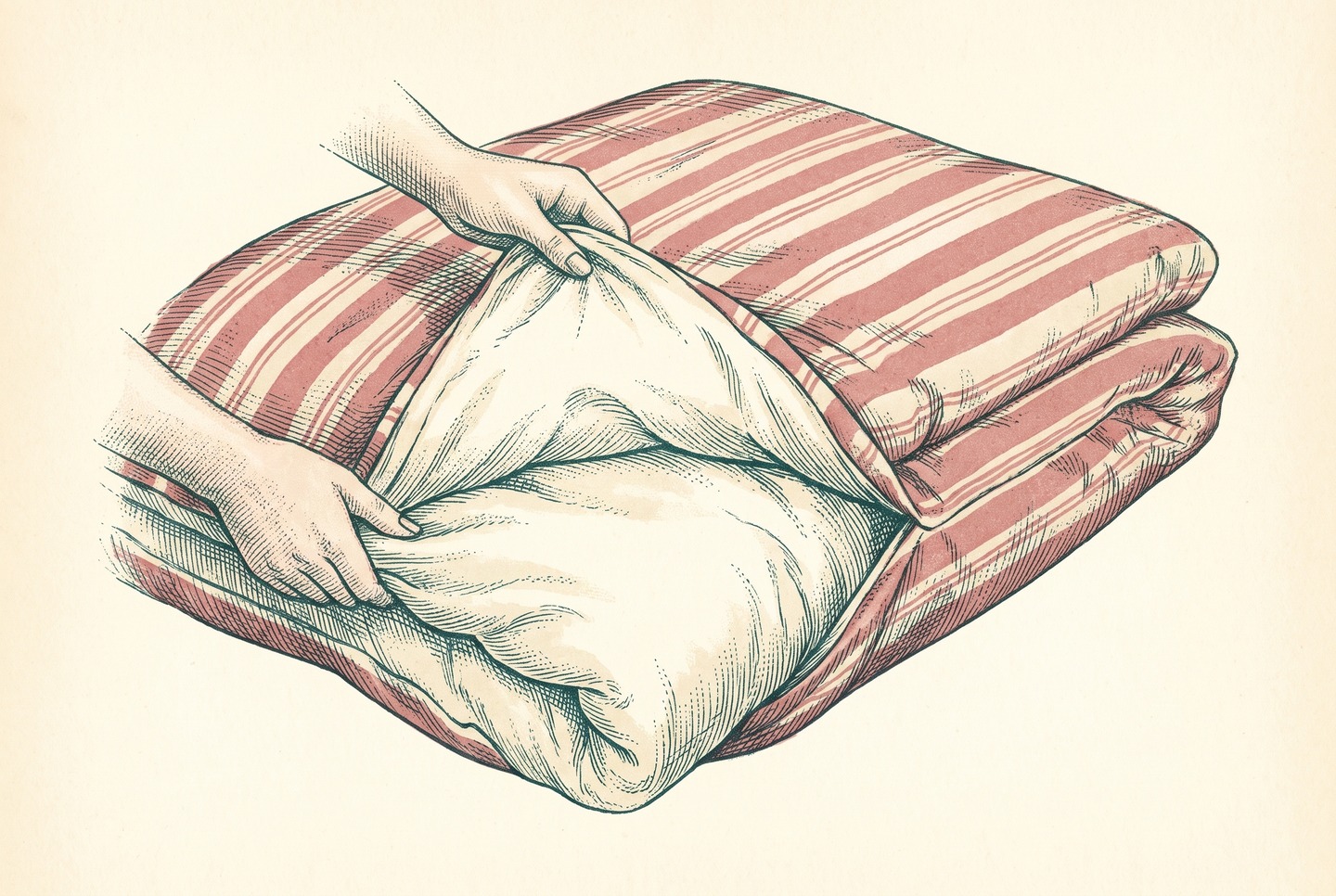
A twin is a label, not a measurement. Across the 4 pages in our set that list sizes, twin comforters varied by 2 inches in width and 4 in length. Three of them sold one piece as Twin/Twin XL, so a single size is meant to serve both beds.
| Page | Twin | Full/Queen | King |
|---|---|---|---|
| Crane & Canopy | 70 x 88 | 90 x 94 | 108 x 94 |
| The Company Store | 70 x 90 | 90 x 96 | 108 x 96 |
| Earthsake | 68 x 86 | 88 x 92 | 92 x 108, as listed |
| Sheetsnthings on Walmart | 68 x 90 | 90 x 90 | Not listed |
Using it as a cotton duvet insert? Then size it against the cover, not the bed. One twin set pairs a 68 by 90 inch insert with a 66 by 90 inch cover (sheetsnthings on Amazon), so the insert is slightly wider than its cover. In our judgement, an insert that matches or slightly exceeds the cover fills the corners better than one that is smaller.
If you use the comforter on its own, measure your mattress width and depth. Add the overhang you want on each side, then compare that total with the listed width. For most twins the choice comes down to a few inches. You only need a tape measure.
Can you wash a 100% cotton comforter at home?
Most all-cotton pages we read allowed machine washing on a cold or delicate cycle, and one gave no care line, so check first.
Of the 4 all-cotton pages in our count, 3 allowed machine washing and 1 gave no care line in what we read. The instructions given were gentle.
One retailer's listing for the Coyuchi comforter says to machine wash on the gentle or delicate cycle in cold water with a plant-based detergent, and advises against whiteners (Organic Living AZ). Crane & Canopy says to machine wash cold on delicate or dry clean (Crane & Canopy). Whisper Organics lists its comforter as machine washable.
A cover changes the routine for any comforter. You wash the cover often and the comforter rarely, which spares the stitching that holds cotton fill in place. That matters because loose cotton batting can shift once the quilting fails.
Check your washer before ordering a king. The comforter needs room to move in the drum. Our care page has more on routine cleaning.
What does GOTS certification mean on a cotton duvet insert?
A GOTS organic label means the product is at least 95% organic fiber, and made with organic means at least 70%, so check the grade.
GOTS, the Global Organic Textile Standard, grades a finished product by its fiber content. A product sold under the organic grade must be at least 95% organic fiber, and the made with organic materials grade needs at least 70% (Biology Insights). Oregon Tilth, a certifier, says GOTS certification covers processing, manufacturing, labeling and distribution of textile products made from at least 70% organic fiber (Oregon Tilth).
| GOTS grade | Minimum organic fiber in the product | What it means for you |
|---|---|---|
| Organic | 95% | Nearly all the fiber is organic |
| Made with organic materials | 70% | Up to 30% can be other fiber |
| No grade named | Unknown | Ask the seller which grade applies |
A GOTS grade tells you about organic content, not warmth or fill weight. It also leaves open whether the fill is cotton. Two all-cotton pages in our count mention GOTS (Quahog Bay).
On a cotton duvet insert, you want the claim to cover the fill as well as the shell. A page that names a grade tells you the minimum. No grade named? Ask the seller which one applies, and whether the finished comforter carries it.
Is a cotton comforter good for people who sleep hot?
A thin cotton comforter can suit people who sleep hot, though wool lets sweat escape faster than cotton, and your heat leaves with it.
The research here is thin. Read any cooling promise with care. The 2024 review found linen sheets improved sleep under warm conditions in young adults (Journal of Sleep Research, 2024). It reported no cotton comforter doing the same. It did conclude that cotton sleepwear suits healthy young adults at normal room temperatures.
Two things decide how a comforter handles your heat. The first is how much fill it carries, which is why the ounce figure matters more than the fiber name. The second is moisture. Cotton absorbs sweat, and once damp it conducts heat more readily. Wool passes vapor more easily than cotton, according to the same review, so the damp leaves your skin and takes your heat with it.
For you, the practical move is a light comforter. A thin cotton comforter over a cotton or linen sheet is a sensible starting point in a warm room. If you still sleep hot under a light comforter, wool fill is the option the evidence leans toward. A light down comforter is another route, and The Company Store's light twin carries 20 oz of down (The Company Store).
Whatever you choose, ask for the fill weight before you buy. Compare it with the comforter you find too warm now.
Common questions
Here are six short answers to the questions people ask most often about cotton comforters, cotton duvet inserts, and twin sizes.
Is a cotton comforter the same as a cotton duvet insert?
In most cases you can use one as the other. Coyuchi describes its cotton-filled comforter as a stand-alone piece or a lightweight duvet insert, with corner loops for anchoring (Coyuchi). The name matters less than the fill.
Does a cotton comforter need a duvet cover?
You do not always need one, since a machine-washable comforter can go bare. You need a cover when the comforter cannot go in the washer, and a cover you wash often means the comforter goes in far less.
What does down alternative mean on a cotton comforter?
It means the fill is not down, and nothing more. Some sellers use it for polyester. Coyuchi's Amazon listing calls its all-cotton comforter a down alternative (Amazon), so check the fill line.
How do I find the fill weight if the page leaves it out?
Ask the seller for the total fill in ounces for your size. If you only get GSM, 240 GSM is about 33 oz on a 68 by 90 inch twin, by our arithmetic.
Will a cotton twin comforter fit a twin XL bed?
It usually will. Three of the 4 pages listing sizes sold one Twin/Twin XL piece. Check the length, which ran from 86 to 90 inches in our set.
Is an organic cotton comforter warmer?
No evidence we found says so. GOTS grades describe how a product is made, not how warm it is. Warmth comes from how much fill you get and which fiber it is.
Sources
Reading list for this cotton duvet piece, each title paired with the section where it does its work.
- FTC, 2026 (ftc.gov), at work in “What does 100% cotton on a comforter label cover?”.
- FTC (ftc.gov), at work in “What does 100% cotton on a comforter label cover?”.
- FTC, Calling It Cotton (ftc.gov), at work in “What does 100% cotton on a comforter label cover?”.
- 16 CFR Part 303 (ecfr.gov), at work in “What does 100% cotton on a comforter label cover?”.
- Walmart (walmart.com), at work in “What does 100% cotton on a comforter label cover?”; “Is the fill inside a cotton comforter usually cotton?”; “How much should a cotton comforter weigh?”; “What size cotton comforter fits a twin bed?”.
- Organic Favorite (organicfavorite.com), at work in “Is the fill inside a cotton comforter usually cotton?”.
- Coyuchi (coyuchi.com), at work in “Is the fill inside a cotton comforter usually cotton?”; “Common questions”.
- Crane & Canopy (craneandcanopy.com), at work in “Is the fill inside a cotton comforter usually cotton?”; “What size cotton comforter fits a twin bed?”; “Can you wash a 100% cotton comforter at home?”.
- Quahog Bay (quahogbaybedding.com), at work in “Is the fill inside a cotton comforter usually cotton?”; “What does GOTS certification mean on a cotton duvet insert?”.
- Whisper Organics (whisper-organics.com), at work in “Is the fill inside a cotton comforter usually cotton?”; “How much should a cotton comforter weigh?”.
- The Company Store (thecompanystore.com), at work in “Is the fill inside a cotton comforter usually cotton?”; “How much should a cotton comforter weigh?”; “What size cotton comforter fits a twin bed?”; “Is a cotton comforter good for people who sleep hot?”.
- Earthsake (earthsake.com), at work in “Is the fill inside a cotton comforter usually cotton?”; “How much should a cotton comforter weigh?”; “What size cotton comforter fits a twin bed?”.
- Journal of Sleep Research, 2024 (ncbi.nlm.nih.gov), at work in “How warm is a cotton comforter compared with down or wool?”; “Is a cotton comforter good for people who sleep hot?”.
- Nature and Science of Sleep, 2019 (pubmed.ncbi.nlm.nih.gov), at work in “How warm is a cotton comforter compared with down or wool?”.
- sheetsnthings on Amazon (amazon.com), at work in “What size cotton comforter fits a twin bed?”.
- Organic Living AZ (organiclivingaz.com), at work in “Can you wash a 100% cotton comforter at home?”.
- Biology Insights (biologyinsights.com), at work in “What does GOTS certification mean on a cotton duvet insert?”.
- Oregon Tilth (tilth.org), at work in “What does GOTS certification mean on a cotton duvet insert?”.
- Amazon (amazon.com), at work in “Common questions”.